Article: What Is Vegetable-tanned Leather? A Complete Guide
What Is Vegetable-tanned Leather? A Complete Guide
Vegetable-tanned leather has a habit of showing its age — and that is exactly why people choose it. Sunlight, daily handling, scratches, and even the oils from your hands gradually change its color and surface. Rather than looking untouched for years, the leather develops a patina that makes every well-used piece slightly different.
That character comes from an unusually slow tanning process. Rather than relying on the chromium salts used for most modern leather, vegetable tanning uses natural tannins extracted from bark, wood, and other plant matter. The process takes weeks rather than days, resulting in leather that tends to be firmer, more responsive to use, and noticeably less uniform than its chrome-tanned counterpart.
Those differences matter when deciding whether vegetable-tanned leather is actually worth paying more for. Below, we’ll look at how it is made, how it compares with chrome-tanned leather, how long it can last, what happens when it gets wet, and what you should know before buying it.
What Is Vegetable-Tanned Leather?
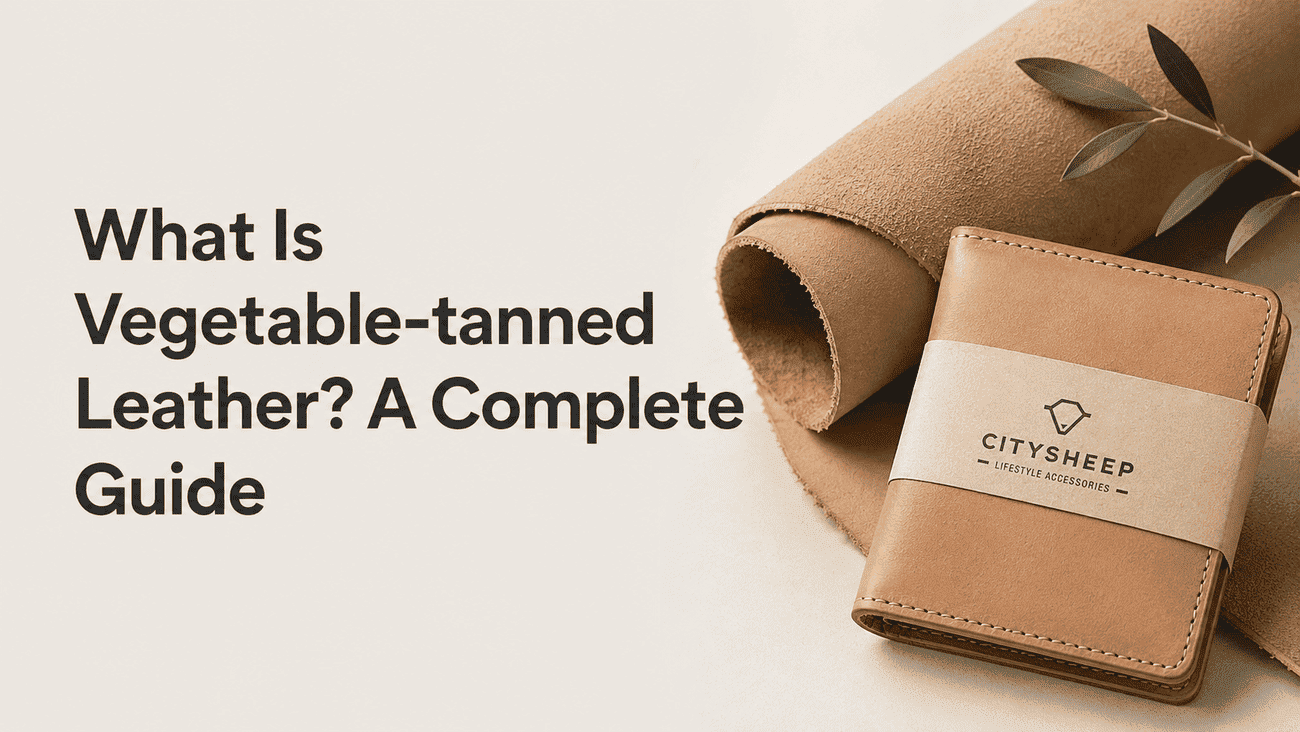
Vegetable-tanned leather is genuine animal hide preserved with natural tannins extracted from tree bark, wood, and other plant matter, most commonly oak, chestnut, mimosa, quebracho, and tara, rather than the chromium salts used in conventional tanning. The method dates back thousands of years and remains a traditional standard for premium leather goods.
So yes, it is real leather. The word “vegetable” refers only to the plant-based tanning agents, not the material itself. This is the exact opposite of “vegan leather,” which is a synthetic, usually plastic-based material and not leather at all.
Vegetable tanning is also relatively rare. As of 2026, published environmental research still puts chrome-based tanning at roughly 90% of global output, leaving vegetable-tanned leather at about 10% of global production. Limited supply, combined with a slower tanning process, explains its premium positioning.
Furthermore, not all plant tannins perform equally. Research on commercial extracts found that quebracho, chestnut, and mimosa achieve tanning percentages of around 80%, while tara and myrobalan reach only 56% and 41%, respectively. Therefore, the tannin source a tannery chooses influences the firmness, color, and aging characteristics of the finished hide.
You will find vegetable-tanned leather in belts, bags, wallets, and leather journals — products designed to improve with daily handling rather than simply wear out.

How Is Vegetable-Tanned Leather Made? The Tanning Process Explained
Vegetable-tanned leather is made by soaking prepared hides in a series of tannin baths with gradually increasing concentrations, followed by drying, oiling, and conditioning. The full production cycle commonly takes 30 to 60 days from raw hide to finished leather.
The process follows five main stages:
- Curing: hides are salted or dried to prevent decay during transport and storage.
- Liming and fleshing: hair, fat, and residual flesh are removed to expose clean collagen fibers.
- Tannin baths: hides move through pits or drums containing plant-based tannin solutions, progressing from lower to higher concentrations.
- Drying and oiling: tanned hides are dried slowly, then replenished with natural oils and fats.
- Conditioning and finishing: the leather is rolled, dyed, or waxed to achieve its final character.
The slowness comes from chemistry, not nostalgia. According to the US EPA’s process description (AP-42, Section 9.15, “Leather Tanning”), tannin concentration starts low and gradually increases, and it usually takes about 3 weeks for the tanning agents to penetrate to the center of the hide. Large tannin molecules diffuse slowly and bond with collagen fibers, so rushing the process can result in unevenly tanned leather.
By contrast, chrome tanning is a one-bath process that, according to the EPA, takes far less time — typically 1–2 days. This difference directly explains the higher labor costs and price of vegetable-tanned leather.

Vegetable-Tanned vs. Chrome-Tanned Leather: Key Differences
The core distinction lies in time and chemistry: vegetable tanning uses plant tannins over several weeks and produces firm leather that develops a patina, while chrome tanning uses chromium(III) salts over 1–2 days and produces softer, more uniform, and more water-resistant leather that remains visually consistent throughout its lifespan.
Heat tolerance separates them measurably. According to SATRA shrinkage temperature testing (TM17), vegetable-tanned leather shrinks irreversibly at up to roughly 85°C, while chrome-tanned leather withstands around 120°C. Therefore, never expose veg tan to hot water or heat drying.
Skin safety is another point of difference. EU REACH (Regulation 301/2014) bans leather goods that come into contact with the skin if they contain 3 mg/kg or more of chromium VI; the US has no equivalent consumer limit, only Proposition 65 warnings in California. In North American patch-test data covering 33,661 patients (2005–2018), potassium dichromate was the most common relevant shoe allergen, at 29.8%. Vegetable-tanned leather contains no chromium and sidesteps this risk entirely.
The environmental gap follows the same pattern. Only 55–70% of chromium salts bind to the hide during chrome tanning, leaving heavily contaminated wastewater, whereas vegetable-tanned leather biodegrades more readily under anaerobic conditions.
At a glance:
- Tanning time: 30–60 days vs. 1–2 days
- Feel and aging: firm, develops a patina vs. soft, unchanging
- Water/heat tolerance: lower vs. higher
- Skin safety: no chromium vs. possible chromium VI traces
- Cost: premium vs. economical
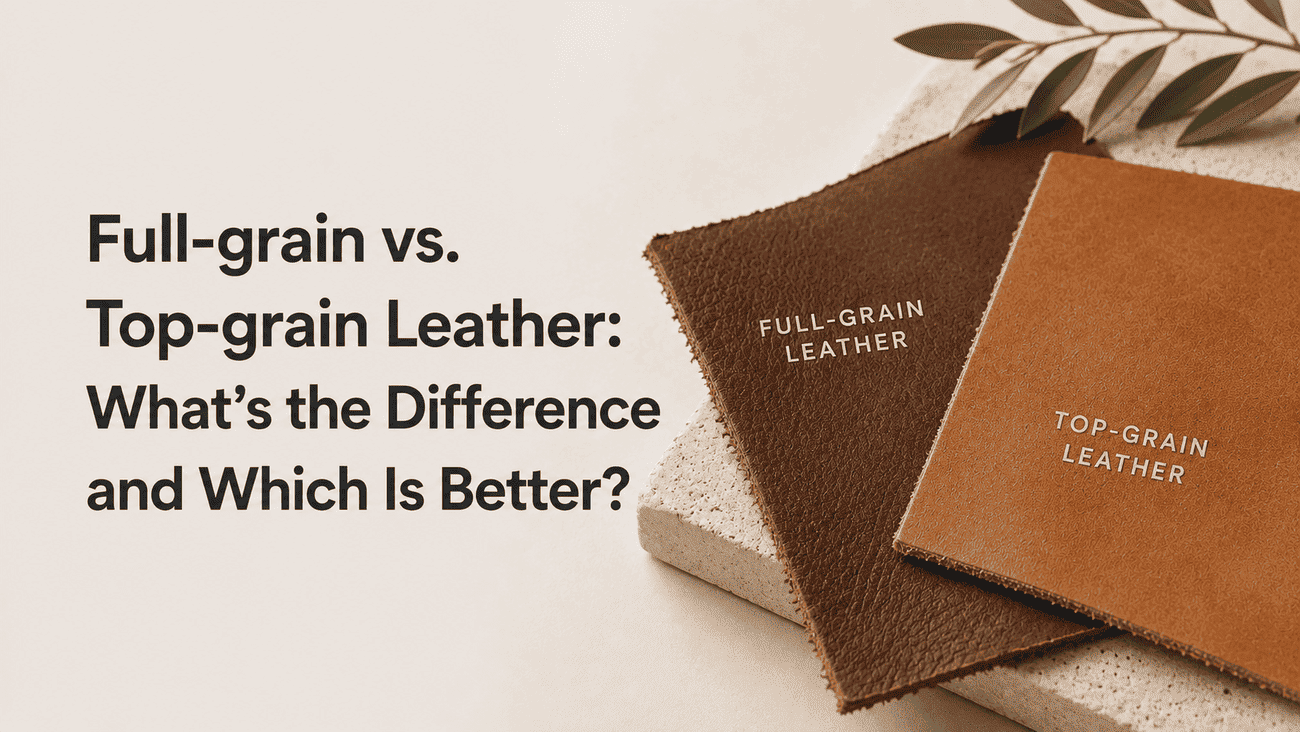
One common point of confusion: tanning method and leather grade are independent. Full-grain vegetable-tanned leather combines both premium attributes: the intact top layer and preservation with plant tannins.

How Long Does Vegetable-Tanned Leather Last? Durability, Patina, and Aging
With basic care, industry practice suggests that a vegetable-tanned belt or wallet commonly lasts 10–20+ years, while bags and journal covers often last for decades. Heirloom-grade goods, conditioned regularly and stitched with quality thread, can outlive their owners.
This longevity comes from chemistry. Dense tannin-collagen bonding creates a firm fiber structure that resists stretching and abrasion. Moreover, the material can be reconditioned, redyed, and repaired rather than replaced, so damage rarely means the end of the product.
Aging is where vegetable-tanned leather earns its reputation. The patina is measurable, not just marketing: an Ege University lightfastness study (JALCA, 2008) found that after 24 hours of xenon-arc exposure, condensed-tannin leathers such as mimosa and quebracho darkened by ΔE ~19–25, while hydrolysable-tannin leathers such as chestnut and tara shifted by only ΔE ~9–10. The difference is attributed to quinone formation in the tannins’ phenolic structure.
The practical takeaway? How quickly your piece darkens depends largely on which tannin the tannery used.
Darkening from sunlight, skin oils, and daily handling is a sign of authenticity, not wear. Chrome-tanned leather cannot develop this depth because its mineral chemistry stays static. Daily-carry items like mini wallets show this transformation fastest, since constant hand contact accelerates the patina.
Can Vegetable-Tanned Leather Get Wet? Water Resistance and Basic Care
Yes, vegetable-tanned leather can get wet without being ruined, but untreated veg tan absorbs water quickly and may develop dark spots, temporary stiffness, or water stains. Light rain is manageable; prolonged soaking should be avoided.
If a piece does get soaked, blot excess moisture with a dry cloth and let it air-dry slowly at room temperature. Never place it near a radiator or in direct sunlight, because veg tan shrinks irreversibly at around 85°C, and heat drying permanently hardens the fibers. Once fully dry, apply conditioner to restore the oils displaced by the water.
Interestingly, this same absorbency is exactly why leathercrafters prize the material. Water opens the fiber structure, making veg tan suitable for wet molding, tooling, and stamping.
Routine care is minimal:
- Condition every few months with a leather balm or wax.
- Keep pieces out of prolonged direct sunlight unless you want faster, uneven darkening.
- Store in breathable dust bags, never in sealed plastic.
- Wipe away dirt with a barely damp cloth.
Daily-carry items such as passport holders and iPad sleeves benefit most from occasional conditioning, since hands and bags expose them to constant friction. At CITYSHEEP, each piece is handcrafted to withstand that daily use from the start.
Vegetable-Tanned Leather: FAQ
Is Vegetable-Tanned Leather Real Leather?
Yes, vegetable-tanned leather is genuine animal hide, and only the tanning agents come from plants. The word “vegetable” refers to tannins extracted from oak, chestnut, or mimosa bark, not the material itself. Synthetic “vegan leather,” by contrast, contains no hide at all.
Do You Need to Finish Veg Tan Leather?
Raw, undyed veg tan benefits from a finish because unsealed leather readily absorbs water and stains. A leather conditioner, wax, and burnished edges provide practical protection for daily use.
However, finishing is optional if you want a fast, natural patina. Pre-finished products from established makers need no extra treatment out of the box, only routine conditioning.
Is Vegetable-Tanned Leather Vegan?
No, vegetable-tanned leather is animal hide, so it is not vegan. The term describes the plant-derived tannins used in preservation, not the material. Plastic-based alternatives avoid animal inputs but carry their own environmental trade-offs, since they do not biodegrade the way natural leather does.
What's the Difference Between Vegetable-Tanned and Full-Grain Leather?
These terms answer different questions: vegetable-tanned describes how the hide was preserved, while full-grain identifies which layer was used, specifically the intact top surface of the hide. A single hide can be both. Full-grain vegetable-tanned leather combines both premium attributes, which is why high-end makers favor it for heirloom goods.
Why Is Vegetable-Tanned Leather More Expensive?
Three factors drive the price: a 30–60-day production cycle versus 1–2 days for chrome tanning, limited supply, and higher tannin and labor costs. Even in 2026, veg tan remains a small fraction of global leather output.
Yet measured by cost per year, veg tan often wins. A wallet that lasts for two decades costs less over time than repeatedly replacing chrome-tanned or synthetic goods.
Vegetable-tanned leather rewards patience, and that philosophy sits at the heart of everything we make at CITYSHEEP. From our family studio in Vilnius, we handcraft each piece from natural materials chosen to age gracefully, developing that warm, personal patina only genuine vegetable-tanned leather can offer.
If you're ready to own something that improves with every year of use, browse our handcrafted leather collection of journals and everyday accessories. Each piece is made to become more yours over time, not less.